What Does a Smoothing Shampoo Actually Do? The Science Behind Frizz Control
1 minute read / May 13, 2026
1 minute read / May 12, 2026
TL;DR
A true hydrating conditioner does far more than simply “make hair soft.” The best formulas help reduce moisture loss, smooth the hair cuticle, minimize friction, improve manageability, and control frizz without creating buildup or heaviness.
Scientifically advanced conditioners combine:
humectants for water retention
emollients for softness
conditioning agents for cuticle smoothing
lightweight lubricants for shine and slip
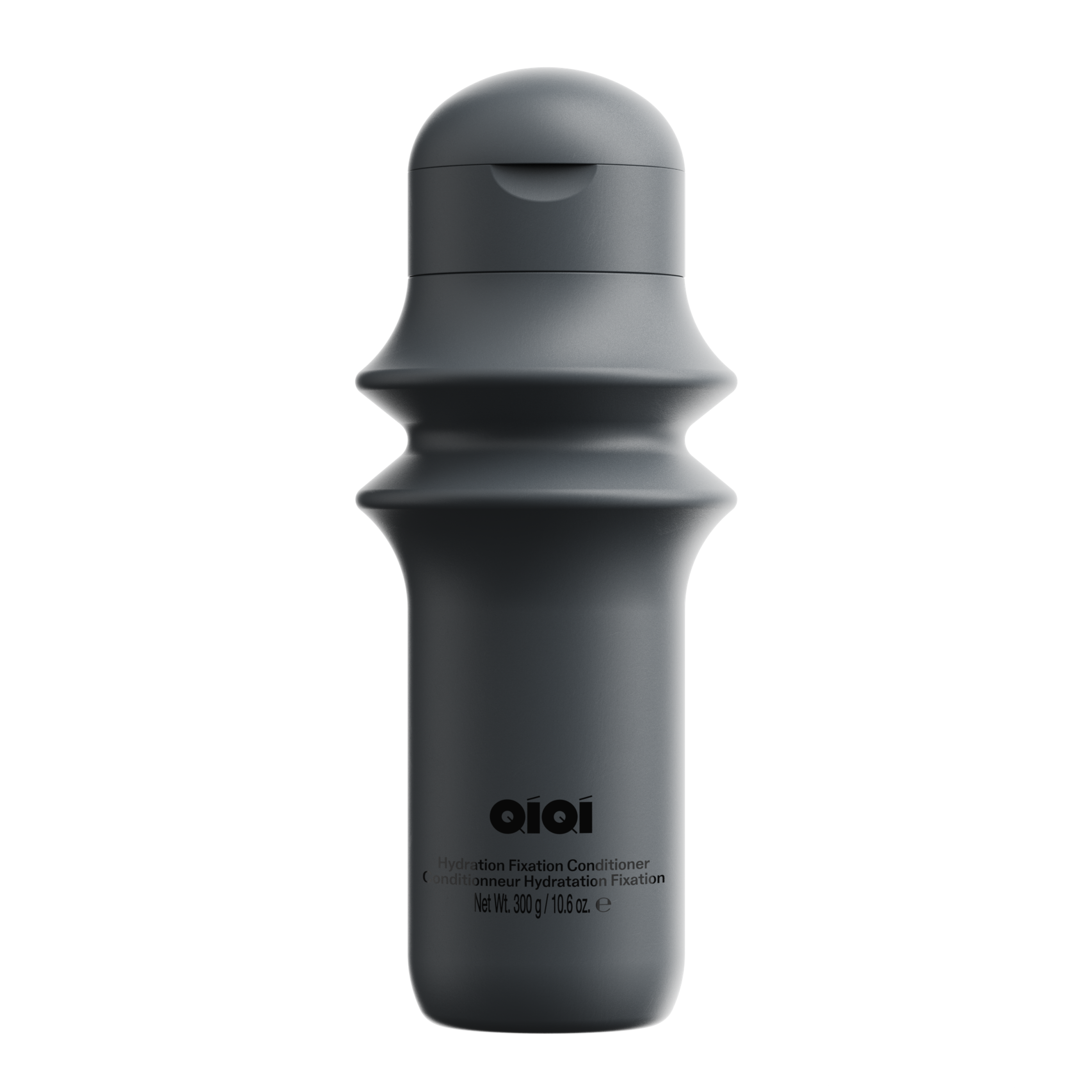
Premium salon-grade formulas like the Qiqi Hydration Fixation Conditioner are engineered to hydrate hair while preserving movement, texture, and clean sensory performance.
What Does a Hydrating Conditioner Actually Do?
Many people think dry hair simply “needs moisture.” In reality, hair hydration is more complex.
Hair fibers are biologically dead structures primarily composed of keratin proteins and lipid layers. Once the protective outer cuticle becomes disrupted from:
Heat styling
UV exposure
Chemical treatments
Aggressive cleansing
Environmental stress
…the hair loses its ability to retain water efficiently.
This creates:
Rough texture
Dullness
Frizz
Tangling
Increased static
Breakage from mechanical stress
A hydrating conditioner helps restore balance by improving how the hair surface interacts with water, oils, and friction.
The goal is not making hair oily or heavy. The goal is creating controlled softness and flexibility.
Hair Does Not “Drink” Water Like Skin
One of the biggest misconceptions in haircare is that hair behaves like living tissue.
Hair fibers can absorb water temporarily, but healthy hair depends more on:
Moisture retention
Cuticle integrity
Lubrication
Reduced friction
Balanced surface conditioning
This is why high-performing conditioners focus heavily on surface engineering.
Understanding the Hair Cuticle
The outer layer of hair consists of overlapping cuticle scales.
When these scales are lifted or damaged:
Moisture escapes more easily
Hair tangles faster
Light reflects poorly
Frizz increases dramatically
Hydrating conditioners work by helping the cuticle lie flatter and smoother.
This creates:
Softer feel
Improved shine
Better combability
Reduced static
Lower friction during styling
Humectants
Humectants attract and retain water.
Examples include:
Glycerin
Panthenol
Propylene glycol
These ingredients help support hydration balance within the hair fiber environment.
However, humectants alone are not enough. Without proper formulation balance, they may even contribute to frizz in highly humid climates.
This is where advanced formulation matters.
Cationic conditioning ingredients are among the most important components in modern conditioners.
These positively charged molecules attach selectively to negatively charged damaged areas of hair.
Benefits include:
Smoother texture
Easier detangling
Reduced static
Enhanced softness
Lower combing damage
This is one reason salon-grade conditioners typically feel dramatically different from lower-end formulas.
A high-performance conditioner should create slip and softness without suffocating the hair.
Modern premium formulations use carefully balanced emollients and lightweight lubricants to:
Reduce roughness
Enhance shine
Improve flexibility
Maintain natural movement
The goal is controlled hydration - not greasy residue.
Frizz is often misunderstood.
In many cases, frizz is not simply “dryness.” It is a combination of:
Cuticle disruption
Uneven moisture absorption
Mechanical damage
Porosity imbalance
Environmental humidity interaction
A scientifically balanced hydrating conditioner helps reduce frizz by creating a more uniform and controlled hair surface.
This improves consistency strand by strand.
Many conditioners rely on excessive oils or waxy residues to create the illusion of hydration.
Initially, the hair may feel soft. But over time:
Buildup increases
Hair becomes limp
Styling performance drops
Washing frequency increases
Texture loses movement
This is where formulation philosophy matters.
At Qiqi, performance is approached differently:
hair should feel hydrated, controlled, and touchable — never buried under residue.
Or as the brand puts it:
Hair is a work of art. Hydration should not compromise its movement, identity, or expression.
The Qiqi Hydration Fixation Conditioner was developed around a modern salon-performance philosophy:
deliver softness and smoothness without residue, weight, or compromise.
Instead of relying on heaviness, the formula focuses on:
Balanced conditioning
Controlled slip
Surface refinement
Lightweight hydration
Frizz management
Sensory elegance
The result is hair that feels:
Softer
Smoother
Cleaner
More manageable
Naturally polished
Without sacrificing movement.
Professional haircare products are often formulated with:
Higher-quality conditioning systems
More refined ingredient balance
Improved deposition behavior
Better sensory optimization
This affects:
How evenly the conditioner spreads
How the hair feels after rinsing
Long-term buildup potential
Styling compatibility
The difference is not marketing alone. It is formulation architecture.
Consumers often confuse hydration with repair.
These are not the same thing.
Hydration Focuses On
Softness
Moisture balance
Flexibility
Smoothness
Frizz reduction
Repair Focuses On
Structural reinforcement
Protein support
Damage mitigation
Tensile strength
The best hair routines combine both intelligently depending on the hair’s condition.
Overusing protein-heavy products on already dry hair can sometimes increase stiffness instead of improving softness.
Even the best conditioner performs poorly when used incorrectly.
1. Remove Excess Water First
Hair that is dripping wet dilutes conditioner excessively.
2. Focus on Mid-Lengths and Ends
These areas typically experience the most dryness and damage.
3. Allow Contact Time
Leave the conditioner on for several minutes for optimal deposition.
4. Use Moderate Heat Carefully
Excessive heat accelerates cuticle damage and moisture loss.
5. Pair With a Gentle Shampoo
Over-cleansing can counteract hydration benefits.
Your hair may benefit from a hydrating conditioner if you notice:
Persistent frizz
Rough texture
Dull appearance
Tangling
Excessive static
Difficulty detangling
Dryness after coloring
Stiffness after washing
Modern haircare is moving away from simplistic “oil-heavy” conditioning.
Advanced formulations increasingly focus on:
Lightweight conditioning systems
Biomimetic surface technologies
Controlled deposition
Reduced buildup
Long-term hair feel
Multi-functional ingredients
Consumers today want hair that feels:
Expensive
Healthy
Effortless
Touchable
Controlled
without looking overloaded.
That shift is redefining premium haircare.
A great hydrating conditioner is not about masking dryness temporarily. It is about improving the behavior and feel of the hair fiber through intelligent formulation.
The best formulas:
Support moisture balance
Smooth the cuticle
Reduce friction
Control frizz
Preserve movement
The Hydration Fixation Conditioner by Qiqi represents this modern philosophy:
hydration without heaviness, softness without compromise, and salon-grade performance grounded in formulation science.
Because hair should never feel coated into submission.
It should move, reflect light, and express itself naturally.
The best hydrating conditioner combines humectants, conditioning agents, and lightweight emollients without causing buildup. Salon-grade formulas generally provide better conditioning balance and long-term performance.
Yes. Frizz is often connected to cuticle disruption and uneven moisture interaction. Hydrating conditioners help smooth the hair surface and reduce static and roughness.
Not necessarily. Hydration and repair are different functions. Hydrating conditioners improve softness and manageability, while repair-focused products target structural damage.
Possible causes include:
Excessive heat styling
Harsh shampoos
High porosity
Protein overload
Insufficient conditioner contact time
Environmental humidity stress
Not inherently. Many modern silicones are highly effective for reducing friction, improving shine, and protecting the hair surface when properly formulated.